Your Website Should Do More Than Look Good
Created by Better Known As*
November 7, 2026
12 minute read
A good-looking website makes an impression.
But an impression isn't the same as a result.
Your website might have beautiful photography.
Carefully chosen typography.
Smooth animations.
A design that feels modern and professional.
But what happens when someone actually uses it?
Can they understand what your business offers?
Can they find what they're looking for?
Do they have a reason to trust you?
And when they're ready, is it easy to take the next step?
A website shouldn't simply make your business look good.
It should help your business achieve something meaningful.
This playbook will help you evaluate six important areas of your website and identify the improvements that could make the biggest difference.
Step 1 — Define Your Website's Purpose
Every website needs a reason to exist.
For some businesses, that means generating enquiries.
For others, it means encouraging bookings, selling products, showcasing work or helping customers understand a service.
Often, it's a combination.
But without a clear purpose, it's easy to build a website around appearance rather than outcomes.
Before thinking about layouts, colours or features, ask:
- Who is our website for?
- What are visitors trying to achieve?
- What do we want them to understand?
- What actions do we want them to take?
- What would make the website successful for our business?
A local service business might need to help customers find the right service and request assistance.
A creative agency might need to demonstrate its capabilities and encourage conversations about potential projects.
Both need good design.
But they don't need exactly the same website.
Start with what the website needs to achieve. Let that purpose guide the design.
Write down the three most important outcomes your website should support.
Step 2 — Make Your Business Easy To Understand
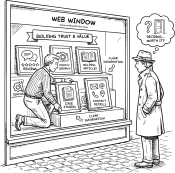
Imagine arriving on a website you've never visited before.
The photography is impressive.
The headline sounds interesting.
The animations are beautifully executed.
But you're still not sure what the business actually does.
That's a problem.
People shouldn't have to work hard to understand what you're offering.
Creative language and distinctive design can help make your business memorable.
But clarity should always come first.
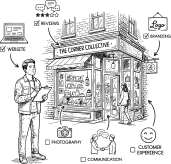
Effective web design brings together visual identity, clear communication and an experience that helps people find what they need.
Look at your homepage and ask:
- Is it immediately clear what we offer?
- Can visitors understand who our services are for?
- Is the information written in language our customers understand?
- Can people find the details they need?
- Is the next step obvious?
You don't need to explain everything at once.
You need to provide enough information for someone to recognise they're in the right place.
Then make it easy to explore further.
Good design doesn't simply attract attention. It helps people understand what they're seeing.
Ask someone unfamiliar with your business to look at your homepage for five seconds.
Then ask them what they think you do.
Their answer might surprise you.
Step 3 — Give People Reasons To Trust You
Most businesses describe themselves as professional.
Experienced.
Reliable.
Committed to quality.
But saying these things doesn't necessarily make people believe them.
Customers need evidence.
Evidence that demonstrates your experience.
Evidence that supports your claims.
Evidence that makes choosing your business feel easier.
Look at the information your website provides.
Does it include:
- Examples of completed work?
- Genuine customer reviews?
- Relevant project photography?
- Clear explanations of your services?
- Information about your experience?
- Real people behind the business?
- Answers to common customer questions?
Photography and video can be particularly valuable.
They allow people to see the business behind the words.
The work.
The people.
The process.
The results.
A website filled with claims asks visitors to take your word for it.
A website supported by evidence gives them something to evaluate.
Trust grows when what you say is supported by what you can show.
Choose three claims your website makes about your business.
Then identify the evidence that supports each one.
Step 4 — Help The Right People Find You
A beautiful website has limited value if nobody can find it.
That's why search visibility matters.
But appearing in search results isn't simply about attracting as many visitors as possible.
It's about attracting people who are genuinely looking for what your business provides.
Think about the searches your potential customers might make.
What services are they looking for?
What questions are they asking?
What problems are they trying to solve?
What information would help them make a decision?
Your website should provide useful answers.
A considered SEO strategy helps connect your website with the searches, questions and needs of the people you're trying to reach.
That might involve:
- Dedicated pages for individual services.
- Clear information about the areas you serve.
- Helpful answers to common questions.
- Relevant examples of previous work.
- Articles that explain important subjects.
- A logical website structure that helps people and search engines understand your content.
More pages don't automatically mean better search visibility.
Every page needs a purpose.
And every page should offer something useful to the people it's intended to reach.
Being found matters. Being found by the right people matters more.
Write down three searches your ideal customers might make.
Then check whether your website provides relevant, useful information for each one.
Step 5 — Make It Easy To Take The Next Step
Getting someone onto your website is only the beginning.
What happens next matters just as much.
Someone might want to:
- Explore a service.
- View previous projects.
- Request a quotation.
- Make a booking.
- Ask a question.
- Find your contact details.
These actions should feel straightforward.
But small obstacles can make a website frustrating to use.
Confusing navigation.
Slow-loading pages.
Unclear buttons.
Complicated forms.
Important information hidden several clicks away.
A website that works beautifully on a desktop but becomes difficult to use on a phone.
Each obstacle creates another reason for someone to leave.
Good user experience isn't always about adding more features.
Sometimes it's about removing what gets in the way.
Clear navigation.
Readable content.
Accessible interactions.
Fast-loading pages.
Simple forms.
Obvious next steps.
The easier your website is to use, the easier it becomes for people to engage with your business.
Open your website on your phone.
Choose an important task, such as finding a service and making an enquiry.
Try completing it from beginning to end.
Write down anything that feels confusing, slow or unnecessarily complicated.
Step 6 — Measure What Your Website Achieves
A website can look successful without delivering meaningful results.
It might attract plenty of visitors.
Appear for relevant searches.
Receive positive comments about its design.
But are those things helping your business?
The answer depends on what you're trying to achieve.
For one business, success might mean more qualified enquiries.
For another, it might mean completed bookings.
Or product sales.
Or helping customers find information without needing to contact someone.
Start by identifying what matters most.
Then consider what you can measure.
Useful information might include:
- Relevant search impressions and clicks.
- Visits to important service pages.
- Completed contact forms.
- Telephone enquiries.
- Booking requests.
- Product purchases.
- Customer feedback.
Tools such as Google Analytics and Google Search Console can help you understand aspects of website performance.
But remember that more traffic doesn't always mean better results.
A hundred relevant visitors can be more valuable than a thousand people with no genuine interest in what you offer.
And data alone doesn't explain everything.
Sometimes speaking to customers or observing how people use your website reveals problems that analytics cannot.
Measure what matters to your business, not simply what looks impressive in a report.
Choose one important outcome your website should support.
Then establish whether you currently have a reliable way to understand how well it's performing.
Your Website Action Plan
You don't need to improve everything at once.
Start with the changes most likely to make a difference.
Think about what you've discovered across the six steps.
Then complete the statements below.
The most important job our website needs to do is...
The biggest obstacle our visitors currently face is...
The strongest opportunity to improve our website is...
The first change we're going to make is...
Keep your answers practical.
Choose improvements based on their likely impact, the evidence available and the effort required.
A clearer headline might make a bigger difference than a new animation.
A simpler contact form might be more valuable than another page.
Better service information might help more customers than a complete visual redesign.
The aim isn't to change everything.
It's to improve what matters.
Playbook Summary
Before moving on, make sure you have:
- Defined what your website needs to achieve.
- Checked whether visitors can understand your business.
- Identified evidence that supports your claims.
- Considered whether the right people can find you.
- Tested how easily visitors can take action.
- Established which outcomes matter most.
- Chosen one practical improvement to begin.
A great website doesn't need to be complicated.
It needs to be useful.
Useful to the people visiting it.
Useful to the business behind it.
Good design helps create the right impression.
Clear communication helps people understand.
Relevant content helps people discover.
Credible evidence helps people decide.
And a thoughtful experience makes it easier to take action.
Because a website shouldn't simply look good.
It should work hard for the business behind it.